Water Damage Questions, Answered Plainly
Questions and answers
How fast does water damage get worse?
Faster than most people expect. In the first hours, water spreads into drywall, carpet padding and subfloors. Within a day or two, materials swell and musty odors can start. After a few days, mold can begin to grow on damp surfaces. Each stage adds scope and cost. Request a callback to check provider availability, because earlier action usually means less to remove and dry.
Can I dry out water damage myself?
Small spills on hard surfaces, yes. Mop, run fans, and use a dehumidifier. Larger jobs are different. Water hides inside walls, under flooring and in insulation, where household fans cannot reach. Surface-dry rooms can still hold moisture that feeds mold later. If water covers more than a small area, or has soaked in, ask a provider to assess it.
What is water extraction and why does it come first?
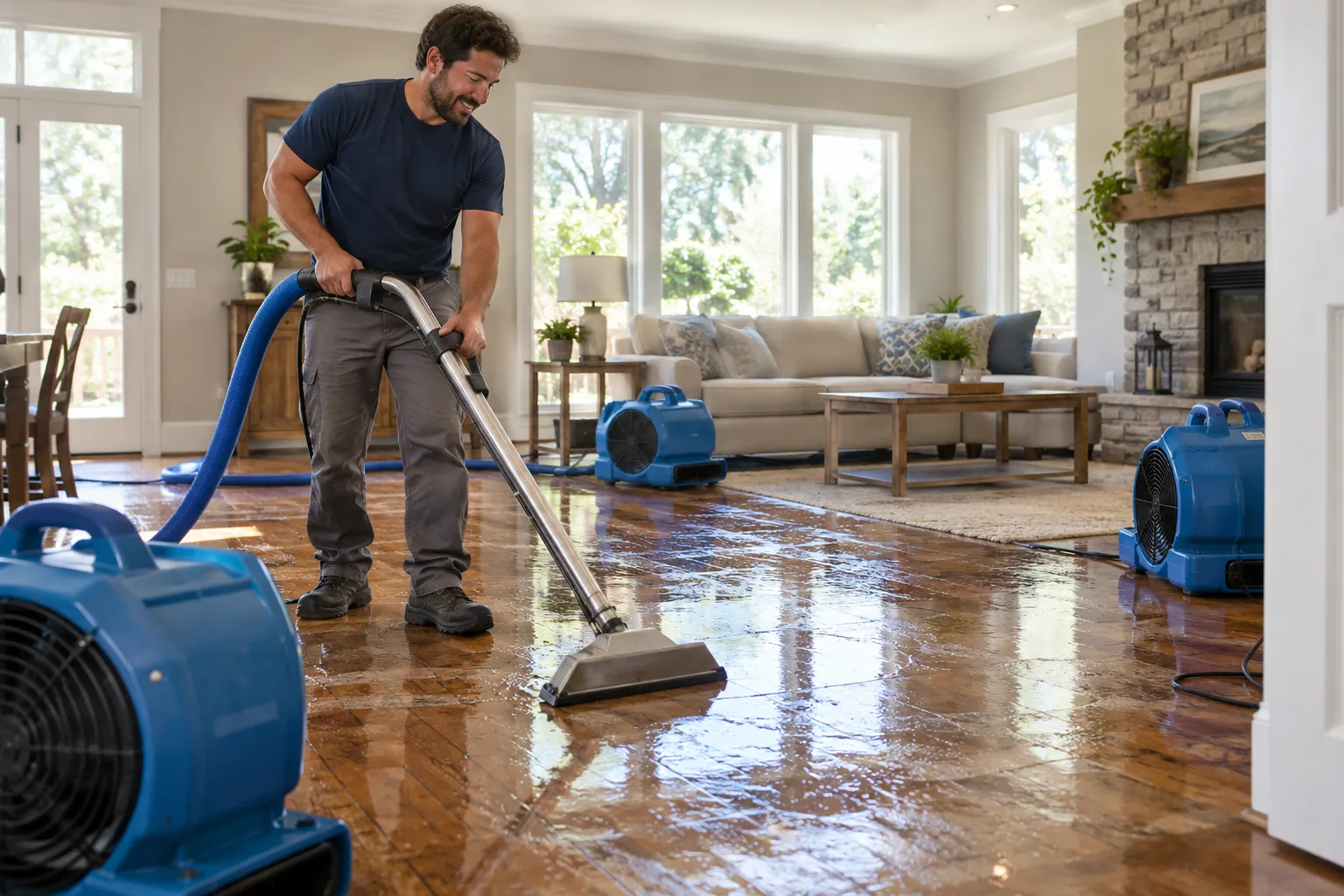
Water extraction means pulling standing water out with pumps and powerful vacuums. It comes first because drying equipment works poorly when a lot of liquid is still present. Removing bulk water also limits how far moisture wicks into walls and wood. Once the standing water is gone, the provider moves on to measuring moisture and drying what remains.
What is structural drying and how long does it take?
Structural drying removes moisture from framing, subfloors and walls using air movers and dehumidifiers. Providers track readings with moisture meters until materials reach normal levels. Many jobs take several days, though it varies with the amount of water, materials and conditions. Dry air in our region can help, but wet framing and hidden cavities still need monitoring.
Is it safe to stay in my house with water damage?
Not always. Standing water near outlets, appliances or a breaker panel is an electrical risk. Turn off power to affected areas only if you can reach the panel safely and dry. Water from sewage or outside flooding can carry bacteria. Wet ceilings can also collapse. If you are unsure, leave the area and ask a provider before returning.
Will homeowners insurance cover water damage?
Some policies may cover sudden damage, such as a burst pipe. Gradual leaks and some flood events are often treated differently. Check your policy or ask your insurer. Providers can often help document damage for a claim, so take photos before cleanup and keep receipts. Coverage depends on your policy, so confirm details before assuming anything.
What should I do before a provider arrives?
Stop the source if you safely can, such as closing a shutoff valve. Take photos and video of the damage. Move small valuables and furniture out of the wet area. Open windows only if weather allows. Do not use a household vacuum on water, and avoid walking through deep water near electricity. Then request a callback to check provider availability.
How much does water damage restoration cost?
Typical U.S. jobs range from a few hundred dollars for a small, contained area to many thousands for large or deep losses, such as a flooded basement. Cost depends on water type, square footage, materials and drying time. Always get a written quote that lists the scope. Request an estimate to compare options with no obligation.
Get in touch
Have water damage in Salt Lake City? Request a callback to check provider availability, or send a request and a local provider will follow up. No obligation.
No obligation