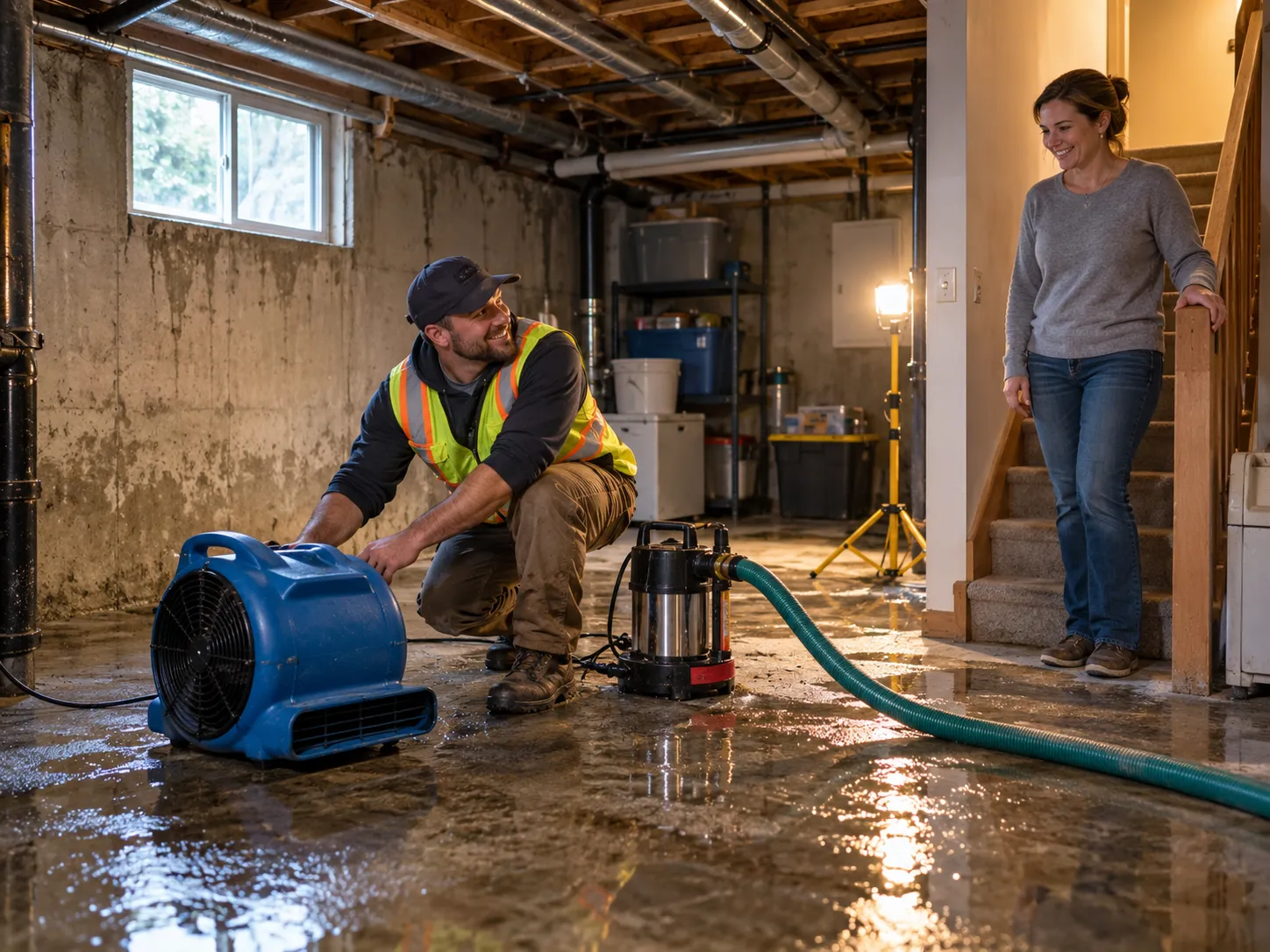
A flooded basement is a timing problem. Water soaks into drywall, framing and carpet within hours. Mold can start within a couple of days. The sooner a provider pumps out the water and starts drying, the less you tear out and replace.
Fbicard Restoration is a referral service for homeowners in the Salt Lake Valley area. The providers in our network do the cleanup, not us. We explain the steps in plain terms and connect you with an independent local provider. Many providers can respond quickly, but availability varies, so ask when you reach out. You can also request an estimate with no obligation.
Flooded basement? Safety comes first
Stop before you step into the water. Basement floods carry two hidden risks: electricity and contamination.
Electrical hazards
Outlets, power strips, a furnace or a panel may sit at or below the waterline. If water touches any of them, stay out. Turn off power only if the panel is dry and you can reach it without standing in water. Otherwise, leave it to a professional.
Standing water and contamination
Floodwater from a storm drain, sewer backup or overflowing yard can carry bacteria. Treat it as unsafe to touch. Water from a broken supply line is cleaner, but it turns unsafe as it sits.
Hour by hour: what the water is doing
Timing changes the outcome. Here is the typical pattern.
The first hours
Water spreads across the slab and wicks up walls. Carpet, pad and lower drywall absorb it fast. This is the ideal window to start water extraction, which means pumping and vacuuming out standing water.
Day one to day two
Moisture settles into framing and the bottom of wall cavities. Wood begins to swell. Musty odor can start. Providers usually set drying equipment during this stage.
Days three to five
Mold growth becomes likely on damp drywall, insulation and stored cardboard. Materials that could have been dried may now need removal. Costs tend to rise from here.
Find out where the water came from
The source decides the cleanup plan. Common causes in this region include:
- Fast spring snowmelt that saturates the soil and pushes water through the foundation
- Heavy snow loads that leave roof or window-well runoff against the walls
- Hail damage that opens gutters, downspouts or flashing
- A failed sump pump or a power outage during a storm
- A burst pipe or a leaking water heater
- A sewer or drain backup
Tell the provider what you saw. Clean water, gray water and sewage are handled differently, and the category affects what can be saved.
Know your options
You generally have three paths. You can handle a very small, clean spill yourself with a wet vacuum and fans. You can hire a provider for extraction and structural drying. Or you can bring in a provider for a full job that includes demolition, cleaning and rebuild planning.
If water covers more than a small area, or if it sat more than a day, a provider is the safer choice. Consumer fans do not dry framing or concrete well.
What flooded basement cleanup includes
A typical job follows this order:
- Safety check and moisture mapping to find wet areas
- Water extraction with pumps and vacuums
- Removal of wet carpet, pad, insulation and damaged drywall
- Structural drying, meaning air movers and dehumidifiers that pull moisture from framing and concrete
- Cleaning and sanitizing of surfaces
- Moisture readings to confirm the space is dry
Dry air in this climate can help, but a closed basement stays damp. Equipment still does the heavy lifting.
Finished vs. unfinished basements
An unfinished basement is simpler. Concrete and bare studs dry faster and are easier to clean.
A finished basement holds more hidden moisture. Drywall, flooring, trim and insulation trap water behind the surface. Newer frame construction often has insulated walls, so providers may cut small openings to check and dry the cavities. Expect more removal and a longer drying period.
Your belongings
Move what you safely can to a dry spot. Lift furniture off wet floors and put foil or blocks under the legs.
- Photograph damaged items before moving them
- Set aside electronics and papers for separate handling
- Discard porous items that touched sewage
- Ask the provider about pack-out and cleaning for items worth saving
Photos also help if you file a claim. Some policies may cover sudden damage, so check your policy. Providers can often help document damage for a claim.
After the cleanup
Cleanup ends when the readings say the structure is dry, not when it looks dry. Ask for the final moisture numbers.
Then comes rebuild: new drywall, flooring and paint. Some providers handle this. Others stop at drying, and you hire a contractor for the rest.
Prevent a repeat. Check the sump pump and its backup power, clear gutters, and slope soil away from the foundation before the next melt or storm.
Questions to ask the provider
Before work starts, ask:
- Is the quote in writing, and what does it cover?
- What equipment will be used, and for how many days?
- How will you test for moisture and share the results?
- Do you handle sewage or only clean water?
- Who rebuilds, and is it priced separately?
Clear answers now prevent surprises later.
Take the next step
If water is still in your basement, the clock is running. Request a callback to check provider availability, or request an estimate with no obligation.
What's Included
Water Extraction
Pumps and vacuums remove standing water so drying can start on the slab and walls.
Structural Drying
Air movers and dehumidifiers pull moisture from framing, concrete and wall cavities.
Damaged Material Removal
Soaked carpet, pad, insulation and drywall that cannot be dried are taken out and hauled away.
Cleaning
Surfaces are cleaned and sanitized, then checked with moisture readings.
Typical Flooded Basement Cleanup Costs
These are typical U.S. ranges. Real prices vary by water depth, water type, basement size and how long it sat. Get a written quote before work begins.
| Item | Typical range | Notes |
|---|---|---|
| Water extraction | $500 – $2,500 | Depends on depth and square footage |
| Structural drying (equipment, per job) | $1,000 – $4,000 | Based on days of drying and equipment count |
| Carpet and pad removal | $300 – $1,500 | Larger rooms cost more |
| Drywall removal and disposal | $500 – $3,000 | Depends on how high the water wicked |
| Cleaning and sanitizing | $300 – $1,500 | Sewage water costs more |
| Mold testing or treatment | $500 – $4,000 | Only needed if growth is found |
How It Works
Make It Safe
Avoid the water, stay clear of electrical sources and note what you see.
Contact a Local Provider
Request a callback to check provider availability, or request an estimate through the form.
Extraction and Drying
The provider pumps out water, removes soaked materials and sets drying equipment.
Confirm and Rebuild
Review final moisture readings, then plan any repairs with the provider.
Why Call Fbicard Restoration
Timing Changes Outcomes
Water that is removed early often means less tear-out and a smaller final bill.
Plain Options
You learn what each path involves before anyone starts work, with no pressure.
Local Providers
Independent providers in our network know regional issues like snowmelt and hail.
No Obligation
Request an estimate, compare it, and decide on your own schedule.
Other Services
Need flooded basement cleanup services in Salt Lake City?
Have water damage in Salt Lake City? Request a callback to check provider availability, or send a request and a local provider will follow up. No obligation.
No obligationFlooded Basement Cleanup Services FAQ
How fast do I need to act on a flooded basement?
As soon as it is safe. Water soaks into drywall and carpet within hours, and mold can begin in a day or two. Many providers can respond quickly. Request a callback to check provider availability. Earlier extraction usually means less material to replace.
Can I clean a flooded basement myself?
For a small, clean spill, yes, with a wet vacuum and fans. For deep water, sewage or soaked walls, hire a provider. Home fans rarely dry framing or concrete fully, and hidden moisture can lead to mold.
Will insurance pay for flooded basement cleanup?
It depends on your policy and the cause. Some policies may cover sudden damage, while flood and sewer backup often need separate coverage. Check your policy, and ask the provider to help document the damage.
Areas we cover
Salt Lake City Holladay Sandy Bountiful Cottonwood Heights Taylorsville Midvale Herriman
Get in touch
Have water damage in Salt Lake City? Request a callback to check provider availability, or send a request and a local provider will follow up. No obligation.
No obligation