Water Damage Restoration for Salt Lake City Homeowners
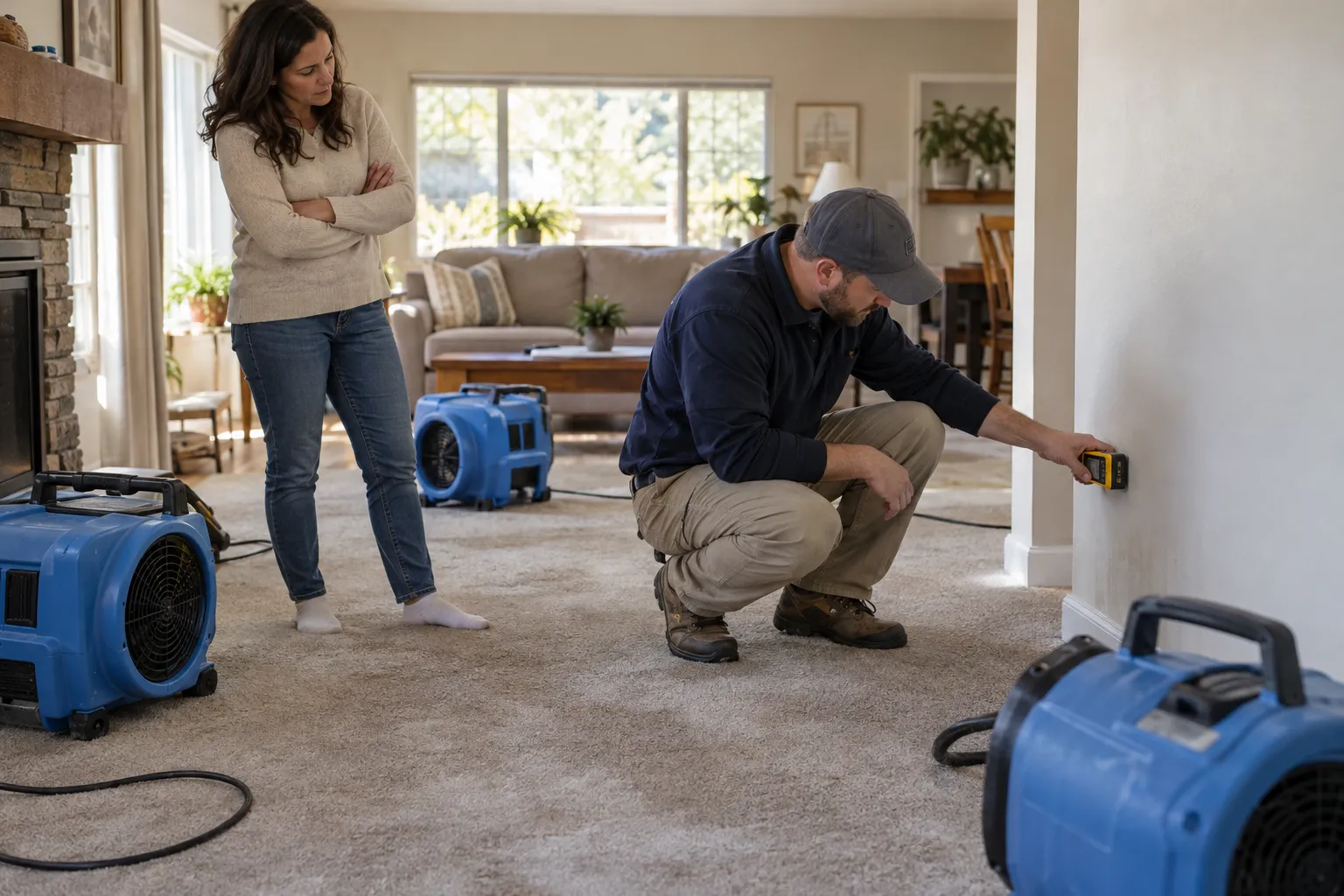
Water damage restoration is the process of removing standing water, drying wet materials, cleaning affected areas and repairing what could not be saved. The work follows a clear order. Water comes out first. Then the structure gets dried. Then cleaning and repairs follow.
Fbicard Restoration is a referral service for homeowners in the Salt Lake Valley area. We do not do the work. We help you sort out where you are in the timeline, explain your options in plain terms, and connect you with an independent provider in our network. The provider assesses the damage, explains the plan and gives you a written estimate. You decide whether to move forward. Know your options, then act while the damage is still small.
Water Damage? Start Here
If water is actively entering your home, stop the source. For a burst pipe or failed appliance, shut off the main water valve. If water is near outlets, cords or the electrical panel, keep clear and leave the power off until a professional confirms it is safe.
Then get a provider on the way. Request a callback to check provider availability in your area. Many providers can respond quickly to emergency water damage repair requests, though availability varies.
The First Hour
The first hour is about limiting spread. Water moves down and sideways. It soaks into carpet, drywall bottoms and subfloors fast.
Move small items and electronics to dry ground. Lift furniture legs off wet carpet. Take photos and short videos before you touch anything. Those records help later with any claim. Do not use a household vacuum on water.
The First Day: Extraction Window
Standing water is the priority. Providers use pumps and extractors to pull it out. This step is called water extraction, and it is the foundation for everything that follows.
Wet drywall and insulation begin to absorb moisture within hours. Hardwood can start to cup. The sooner the bulk water is gone, the more material can usually be dried rather than replaced.
Days Two and Three: Drying Decides the Outcome
Now the job shifts from water you can see to moisture you cannot. Wall cavities and subfloors hold water long after the surface looks fine.
Providers set air movers and dehumidifiers and monitor readings with moisture meters. This is structural drying: pulling moisture out of framing, subfloor and wall cavities until readings match dry reference levels. Skipping it is how hidden damage gets sealed behind fresh paint.
Day Four and Beyond: Mold Risk Rises
Mold can begin to grow on damp organic surfaces within a few days. Drywall paper, wood and dust all feed it. A musty smell is often the first sign.
Once mold is established, the job grows. Containment, removal and extra cleaning may be needed. Waiting does not shrink the project. It usually widens it.
What Restoration Covers
A typical job includes several stages:
- Inspection and moisture mapping
- Water extraction
- Structural drying and dehumidification
- Removal of materials that cannot be saved
- Cleaning, sanitizing and odor control
- Repairs such as drywall, flooring and paint
Not every job needs every stage. A small leak caught early may need only drying. A larger loss often needs the full list.
Types of Water and Why They Matter
Providers sort water into three categories. Clean water comes from supply lines or rain through a roof. Gray water has some contamination, such as washing machine overflow. Black water is heavily contaminated, such as sewage or river flooding.
Clean water left alone can degrade into gray water. Category sets the safety steps and what gets discarded. Porous items touched by black water are usually removed.
Know Your Options Before Work Starts
You are not locked in by a first call. A provider can inspect, explain what is wet and lay out choices: dry in place, partial removal or full tear-out.
Ask what each option costs, how long it takes and what the risks are. Ask for it in writing. Then decide. Request an estimate with no obligation if you want numbers first.
Working With Your Insurance
Some policies may cover sudden damage, such as a burst pipe. Gradual leaks and flooding are often treated differently. Check your policy, and contact your insurer early.
Providers can often help document damage for a claim with photos, moisture readings and itemized notes. Keep receipts for emergency steps you take. Coverage decisions belong to your insurer, not to a provider or Fbicard Restoration.
Local Conditions That Change the Job
Heavy snow loads and fast spring melt can push water into basements and under exterior walls. Hail can open roof surfaces and let rain in. Many newer frame homes have finished basements, where carpet and drywall absorb water quickly.
Dry air helps surfaces dry, but it can hide moisture trapped in wall cavities. Dry-looking is not the same as dry.
Choosing a Provider
Compare a few points before you agree to work:
- Does the provider explain the drying plan in plain terms?
- Is the estimate written and itemized?
- Do they measure moisture, not just look?
- Do they describe what will be removed and why?
Providers in our network are independent businesses. Verify licensing and insurance directly with the provider.
Getting Your Home Back to Normal
After drying is confirmed, repairs begin. That can mean new drywall, flooring, trim and paint. Some providers handle both drying and rebuild. Others hand off to a separate contractor.
Ask for a final moisture reading before walls are closed. Dry it right, and the repairs hold up.
What's Included
Water Extraction
Pumps and extractors remove standing water from floors and carpet so drying can start on a clean footing.
Structural Drying
Air movers and dehumidifiers pull moisture out of framing, subfloors and wall cavities.
Cleaning and Sanitizing
Affected surfaces are cleaned and treated, and odors are addressed once materials are dry.
Repairs and Rebuild
Drywall, flooring and paint are replaced where materials could not be saved, restoring the finished look.
Typical Water Damage Restoration Costs
Costs vary with the size of the loss, the type of water, the materials involved and how soon drying starts. These are typical U.S. ranges only. Always get a written quote before work begins.
| Item | Typical range | Notes |
|---|---|---|
| Water extraction | $500 – $2,500 | Depends on area size and water depth |
| Structural drying | $1,000 – $4,000 | Equipment is usually billed per day |
| Drywall removal and replacement | $1,500 – $5,000 | Varies by how many walls are wet |
| Carpet and pad replacement | $1,000 – $4,000 | Higher for large rooms or premium material |
| Mold remediation | $1,500 – $6,000 | Higher if mold has spread into walls |
| Full restoration, moderate loss | $3,000 – $10,000 | Includes drying, removal and basic repairs |
How It Works
Share your situation
Tell us what happened, where the water is and roughly how long it has been there.
Get matched with a provider
We connect you with an independent local provider in our network who handles your kind of loss.
Review the written estimate
The provider inspects, explains the plan and gives you a quote with the options laid out.
Decide and begin work
You choose whether to proceed. The provider then handles extraction, drying and repairs.
Why Call Fbicard Restoration
Timeline First
We organize your options by how long water has been present, because timing shapes the scope of work.
Plain Terms
Technical terms get explained once, so you can compare providers and quotes with confidence.
Local Providers
You are matched with independent providers that serve your part of the wider area.
No Obligation
Requesting an estimate costs you nothing to decide on, and the choice to proceed stays yours.
Other Services
Need water damage restoration in Salt Lake City?
Have water damage in Salt Lake City? Request a callback to check provider availability, or send a request and a local provider will follow up. No obligation.
No obligationWater Damage Restoration FAQ
How fast does water damage get worse?
Wet drywall and carpet begin absorbing moisture within hours, and mold can start growing in a few days. Early extraction and drying usually mean fewer materials need to be replaced.
Does homeowners insurance cover water damage?
Some policies may cover sudden damage, such as a burst pipe, while gradual leaks and flooding are often treated differently. Check your policy and contact your insurer early. Providers can often help document damage.
Can I dry my home myself with fans?
Fans help with small, clean spills. They rarely dry wall cavities or subfloors fully. Hidden moisture can stay behind and lead to mold, so larger losses call for professional equipment.
Areas we cover
Salt Lake City Holladay Sandy Bountiful Cottonwood Heights Taylorsville Midvale Herriman
Get in touch
Have water damage in Salt Lake City? Request a callback to check provider availability, or send a request and a local provider will follow up. No obligation.
No obligation